.png)


Anant Swarup is a former Indian Railway Personnel Service officer and was Additional Secretary with the Department of Commerce.
March 4, 2025 at 10:28 AM IST
Investment in railways is not just about modernising transportation—it is an economic imperative. Railways are the backbone of India’s infrastructure and hold the key to solving multiple economic and logistical challenges, from congestion on roads to reducing logistics costs and ensuring sustainable urbanization.
Despite their transformative potential, railway investments have been historically overlooked in favour of road networks, creating a structural imbalance that must now be corrected. If the government seeks long-term, high-impact economic growth, prioritising railways over other infrastructure investments is the most pragmatic choice.
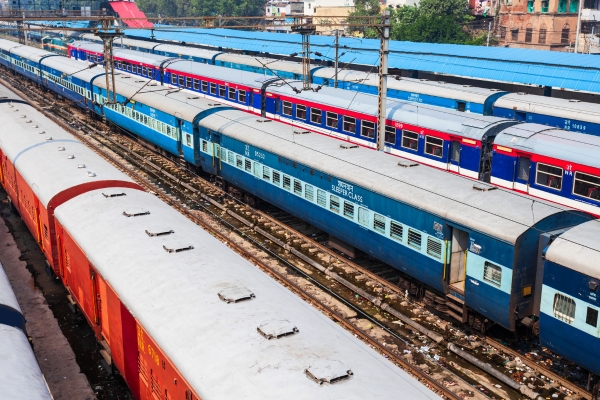
Railways have a far-reaching economic impact. Studies from countries such as China, Japan, and the UK suggest that investments in rail infrastructure generate a multiplier effect ranging from 1.6x to 5x. Rail transport is inherently more efficient than road transport for moving bulk goods over long distances. A single freight train can replace 133 trucks, reducing fuel consumption, lowering emissions, and easing road congestion. As India’s logistics demand is expected to grow at a compound annual growth rate (CAGR) of 8-9% by 2030, failing to shift a larger share of freight transport to rail would strain both the economy and the environment.
The safety aspect is equally significant. India has the highest number of road accident fatalities globally, with over 4.6 lakh accidents and 1.68 lakh deaths in 2022 alone. Reducing truck dependency and increasing rail transport can dramatically bring down these numbers, making transportation safer and more reliable. Railways also offer a sustainable solution to environmental concerns, contributing only 1% of transport sector emissions, compared to 15% from road transport. If India is serious about meeting its net-zero emissions target by 2070, it must accelerate railway expansion.
Despite its advantages, India’s railway system has suffered from chronic underinvestment. Between 1950 and 2014, while freight loading grew by 1344% and passenger kilometers by 1642%, the route kilometers increased by only 23%. This stagnation has led to congestion, inefficiency, and safety concerns, with 65% of high-density railway corridors operating beyond capacity. Freight train speeds remain stuck at an abysmally low 25 km/h, eroding the competitiveness of rail transport compared to trucks.
Meanwhile, investments in roads have surged. The National Highway Development Programme and Pradhan Mantri Gram Sadak Yojana significantly improved road infrastructure, but at the cost of railway development. By the 11th Plan, railways’ share of total transport investment had fallen from 56% in the 7th Plan to just 30%, stagnating its GDP contribution at 1% while roads grew to 4.9%. Without course correction, India’s logistics costs—already among the highest in the world—will continue to hamper economic competitiveness.
Railways are not just about freight and passenger transport; they are crucial for urban planning. India’s rapid urbanization has led to overcrowded metros, rising pollution, and housing shortages. High-speed and semi-high-speed rail corridors connecting satellite towns to major cities can alleviate these pressures, making housing more affordable and reducing commute times. Countries like Japan and China have successfully used rail networks to decongest cities and spur economic growth in smaller towns.
Corruption and inefficiencies in India’s road transport sector also present another argument for railway expansion. A 2022 study estimated that truckers pay Rs. 48,000 crores annually in bribes, adding to transport costs and inefficiencies. Expanding railway freight reduces dependency on road transport, cutting out these informal costs and fostering greater transparency in logistics.
While investing in railways is essential, ensuring affordability and accessibility is just as crucial. Railways, like education and healthcare, are a public good. Privatization efforts must be balanced with social obligations to ensure that railway services remain within reach of the common citizen. Government policy should focus on targeted investments with measurable objectives, ensuring efficiency, safety, and service quality.
A Strategic Imperative
If India is to achieve its aspirations of becoming a $5 trillion economy and a global manufacturing hub, an efficient railway network must be at the core of its infrastructure policy. Prioritizing railways over short-term highway expansions can unlock sustainable growth, enhance safety, reduce emissions, and create a more equitable distribution of economic opportunities.
The government must seize this opportunity to transform Indian railways into a modern, efficient, and globally competitive network. Investing in railways is not just about building tracks—it is about laying the foundation for India’s economic future.
More From BasisPoint