.png)


March 1, 2025 at 6:50 AM IST
India’s economy grew 6.2% in the third quarter of 2024-25, broadly in line with expectations, but the underlying signals embedded in the second advance estimate for the full year deserve far closer scrutiny.
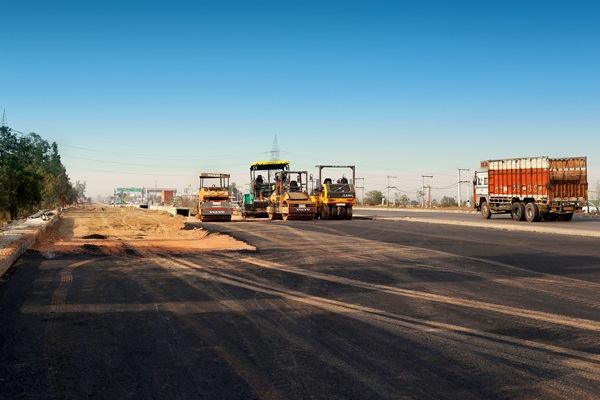
The revised growth for the previous year at 9.2% — the strongest in over a decade barring the post-pandemic rebound — highlights the extent to which public spending has carried the weight of the economic recovery. This spending — largely on infrastructure — provided critical support to sectors such as construction, transport and financial services, and was enough to paper over weak private capital expenditure and uneven household demand.
That model has now reached a point of inflection. The second advance estimate for 2024-25 projects a slowdown to 6.5%, which is neither alarming nor reassuring. It reflects the reality that public capital expenditure growth is set to moderate after several years of expansion. With limited fiscal space, the state’s ability to keep driving investment will no longer be as elastic as it was in the immediate post-pandemic years.
The trouble is, the private sector is still not stepping in to fill the gap.
As per a SBI Research report, gross capital formation is projected to slip further to 31% of GDP in 2024-25 from 33% the previous year. That slide reflects a deeper problem — the unwillingness of private corporations to commit to new capacity creation despite strong balance sheets and a supportive credit environment.
The private sector’s role in capital formation is shrinking, with private investment’s share of GDP falling to 24% in 2023-24 from 25.8% the year before, the same report noted. There is nothing in the latest projections that suggests this will turn decisively in 2024-25. The pattern is clear — public investment has been asked to do too much for too long, while private risk appetite remains conspicuously absent.
This isn’t just a cyclical hesitation. It is a structural warning. The government can only push public capex so far without crowding out fiscal room for other priorities. Household savings, the other key source of long-term investment funding, have already slumped driven partly by the rising cost of living and partly by shifting financial behaviour.
The result is an economy increasingly dependent on external flows to sustain even modest investment rates. With household savings shrinking, private investment falling, and fiscal space tightening, the core funding base for future growth is eroding right at the point when India should be accelerating towards the 8% growth path needed to achieve developed economy status by 2047.
There is no more cushion left. The public sector has carried the economy through the pandemic and the uneven recovery that followed, but it cannot — and will not — carry it indefinitely. Unless private investment revives soon, India will enter the second half of this decade facing not just slower growth, but a fundamental weakening of its investment and savings cycle.
This is the real message from the second advance estimate for 2024-25. It is not just a warning about a slowdown — it is a warning about the slow erosion of India’s ability to fund its own future growth.
More From BasisPoint