.png)

More Than A One-Day Spectacle, Budget Must Balance Vision With Challenges
The Union Budget remains a highly anticipated event in India, shaping fiscal policy despite evolving economic dynamics. While long-term goals dominate, immediate challenges like slow growth and global uncertainties demand agile responses beyond the Budget speech.
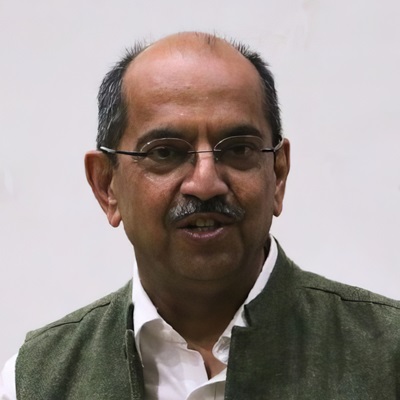
Vijay Singh Chauhan, a former IRS official, is a trade expert, working as Executive Director with Deloitte Touche Tohmatsu India* and Senior Visiting Fellow at Isaac Centre for Public Policy, Ashoka University.
January 30, 2025 at 10:08 AM IST
It’s that time of the year again. The presentation of the Union Budget before the Indian Parliament by the Finance Minister attracts more public and media attention than perhaps any other country. This attention has remained undiminished despite changes in the ruling party, finance minister, date, time, or even the shrinking role of the government in the economy.
The Budget expectations of citizens, lobbies, and pressure groups vary significantly, which is perhaps responsible for the disjointed nature of the Budget speech, divided into two parts, with the latter focusing on taxation matters. The voluble middle class remains focused on income-tax rate cuts, and smokers take a deep puff while listening to the speech, hoping the smoke does not damage their pockets. This disjointed Budget speech, often with a single paragraph highlighting a specific scheme or addressing a vulnerable section, must yet serve as an annual tool of long-term fiscal policy. The forthcoming Budget on 1 February is, therefore, expected to guide Viksit Bharat @ 2047, highlighting schemes to support Make in India, strengthen infrastructure, and deepen the Amrit Kaal. However, as in the past two decades, the Medium-Term Fiscal Policy documents mandated by the bipartisan FRBM Act will hardly merit any attention.
However, with no clear enunciation of fiscal policy—quite unlike monetary or trade policy—practitioners and media experts seek to discern a continuation or shift in the government's fiscal stance.
Despite the focus on long-term goals, Budgets are often forced to address sudden shocks, both national and global.
In this Budget, the primary national concern that will play a significant role is the perceptible slowdown in the economy and employment growth. The temptation to spend the way out of the problem—like in 2008 during the financial crisis—will be tempered by the persistence of inflation and a worsening exchange rate. With interest payments accounting for about one-third of government expenditure, it would be a surprise if the government deviates from the “fiscal glide path.”
Fiscal prudence, however, doesn’t really limit the possibilities for the government to take growth-enabling measures. Though it calls for a return to the credo of “Minimum Government Maximum Governance”. Government must act as an enabler and facilitator. It may also be a good time to take stock of all on-going government schemes to move to zero-based budgeting. Bringing efficiency to government functioning, in delivering services, giving permissions and completing projects with pre-committed timelines will perhaps provide growth momentum more powerful than multiple poorly designed schemes.
As in 2008, trouble seems to be emerging from distant lands again. Uncertainty in the global order has jumped manifold, requiring the Indian government to consider many presumptive steps or at least put in place mechanisms to respond to both challenges and opportunities with agility. It is essential to recognise that while the fundamentals of the Indian economy remain strong, it is also more aligned with the global economic order.
Agility is, in fact, the need of the day, with transformative changes that have made the idea of “real-time” a reality. In this era, annual budgets cannot be the primary tool for fiscal action and responses.
This, in some sense, has already happened, with more policy announcements and tax changes like the GST taking place outside of the Budget announcement.
The real success of the Indian economy over the last decade has been in digitalisation. It has also helped the government streamline processes, with passport and international cargo clearance being the best examples. One expects measures to widen and deepen initiatives in other areas of service delivery.
The destination “Viksit Bharat” cannot be reached by one giant leap, but a million small steps – actualising Sabka Saath Sabka Vikas. It is time each district, each town, each village and panchayat of the country identified the one most critical bottleneck to their growth, with the Central Government stepping in to help them overcome that challenge.
Every budget may not be a “dream budget”, but it sends many of us dreaming of what the FM can do. Budget-day action continues to have its own allure. Don’t miss it, but keep the caveats in your mind, as I will.
*Views expressed here are personal.
More From BasisPoint