.png)

Markets Tilt Risk-Off as Tariff Threats and Geopolitics Resurface
Here’s your quick read to start the day: a chatty, no-fuss look at overnight moves, the big story, what’s on the docket, and the tickers you need to watch.
Richard is an independent financial journalist who tracks financial markets and macroeconomic developments
January 27, 2026 at 1:46 AM IST
GLOBAL MOOD: Risk-Off
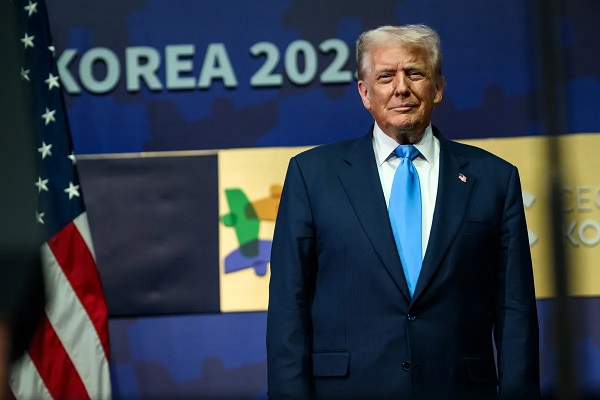
Global markets are leaning risk-off, weighed down by renewed trade and geopolitical uncertainty despite pockets of supportive data. Asia opened mixed, with South Korean equities under sharp pressure after President Donald Trump announced a tariff hike on South Korean imports to 25%, hitting auto stocks hard and reviving fears of broader protectionist spillovers.
Geopolitical risks remain elevated as Washington keeps up pressure on Iran and signals possible military escalation, while political uncertainty in the US—around a potential government shutdown and speculation over Federal Reserve leadership—has driven investors toward caution.
Softer US Treasury yields and a weaker dollar reflect defensive positioning, even as US activity data point to improving growth momentum.
TODAY’S WATCHLIST
- FOMC’s Two-Day Policy Meeting Begins
- ECB President Lagarde Speech
- Oct-Dec Earnings: Asian Paints, Vodafone Idea
THE BIG STORY
On Monday, Trump announced a hike in tariffs on South Korean imports to 25%, targeting autos, lumber and pharmaceuticals, and criticised Seoul’s legislature for failing to finalise a trade deal with Washington.
Geopolitical risk remains elevated elsewhere. The US signalled it is “open for business” if Iran seeks talks, even as Washington continues to pressure Tehran over its crackdown on protesters. Trump also warned that a US naval armada was moving toward Iran, reiterating threats of action if killings continue or nuclear activity resumes.
Data Spotlight
Other activity indicators also showed signs of stabilisation. The Chicago Fed National Activity Index moved up to -0.04 from -0.42, mainly due to gains in production and employment components. This points to a recovery in growth following October’s softer performance.
Takeaway:
WHAT HAPPENED OVERNIGHT
- US stocks gains as markets brace for Fed, earnings, political risk
- US stocks Indexes ended higher as investors positioned ahead of a heavy earnings and policy week.
- Apple was up 3%, Meta rose 2.1%, Microsoft gained 0.9% ahead of key earnings, communication services also firm.
- Tesla fell 3.1%, weighing on the consumer discretionary sector.
- Attention centered on Wednesday’s FOMC decision, amid speculation President Trump could name a new Fed Chair as soon as this week.
- Sentiment tempered by renewed US government shutdown risk after Democrats threatened to block a $1.2 trillion funding bill tied to Homeland Security spending.
- US stocks Indexes ended higher as investors positioned ahead of a heavy earnings and policy week.
- US Treasury yield soften as shutdown risk and Fed focus intensify
- The benchmark 10-year US Treasury yields eased below 4.22%, reaching their lowest level in nearly two weeks.
- Investors grew cautious amid renewed threats of a government shutdown after Democratic leaders vowed to block a $1.2 trillion funding package that included extra Homeland Security allocations.
- Recent shootings involving federal immigration agents in Minnesota, including a fatal incident with Border Patrol officers, have caused local unrest and calls for federal accountability, contributing to policy uncertainty and market concerns.
- Traders are eyeing the Federal Reserve’s first monetary policy decision of 2026, this week, with a widely anticipated hold but keen attention to updated economic outlooks and guidance on future rate actions.
- The benchmark 10-year US Treasury yields eased below 4.22%, reaching their lowest level in nearly two weeks.
- US Dollar slides to four-month low amid policy and confidence concerns
- The US dollar index fell toward 97, its lowest level in over four months.
- Last week’s 1.9% weekly fall marked the sharpest decline since April.
- Investor confidence dented by policy uncertainty and renewed debate over a weaker-dollar bias in Washington.
- The US dollar index fell toward 97, its lowest level in over four months.
- Crude oil prices ease after prior surge as storm risks offset Iran tensions
- Brent crude prices slipped 0.4% to $65.59/barrel, paring gains after last session’s 2%+ rally, while WTI fell 0.7% to $60.63/barrel, tracking broader consolidation.
- Markets assessed potential output disruptions from winter storms in US shale regions.
- US–Iran tensions remained a background support, but no fresh escalation emerged.
- Brent crude prices slipped 0.4% to $65.59/barrel, paring gains after last session’s 2%+ rally, while WTI fell 0.7% to $60.63/barrel, tracking broader consolidation.
Day’s Ledger
Economic Data
- US Durable Goods Sales Data
- US Money Supply Data
- Oct-Dec Earnings: Asian Paints, Vodafone Idea, CG Power, Marico, Motilal Oswal, TATA Consumer, Vishal Mega,
- Active Clothing board to consider warrants issue
- FOMC’s Two-Day Policy Meeting Begins
- ECB President Lagarde Speech
- BoJ Monetary Policy Meeting Minutes
- DLF makes a ₹20 billion bet on senior living in Gurugram this quarter
- Sun Pharma, Cipla recall products in US over manufacturing issues: USFDA
- Too early to say small car demand will sustain GST cuts: Ceat MD & CEO
- Embassy Developments pre-sales to jump 2.5-fold to ₹50 billion
- Adani Group, Embraer to set up commercial aircraft assembly line in India
- PVR Inox sells premium snack brand 4700BC to Marico for ₹2.27 billion
- Nalco eyes 200-300 MW green power with battery storage for clean aluminium
- Tata Technologies expects 'very strong' FY26 despite global uncertainties
- Chennai Petroleum Corp reports ₹10.02 billion Q3 profit on strong margins
- Axis Bank Q3 results: Net profit rises 3% to ₹64.90 billion, NII at ₹142.87 billion
- Gold prices seen heading to $6,000 as demand, global risks rise: Analysts
- AI likely to contribute $550 billion to India by 2035 across sectors
- Morgan Stanley eyes expansion in Asia as deregulation opens new markets
- UBS maintains underweight stance on India amid weak nominal GDP growth
- India, EU to seal FTA negotiations on January 27
- Budget 2026-27: New playbook for trade, Customs reforms needed
- Transforming India's Grid for a Renewable Future
- Why the Budget Should Support Development Goals
- GAIL is Embedding Itself at Scale into India's Energy Infrastructure
- The Asset That India’s Markets Left Behind
- Baltic Dry Index in a Fragmenting Global Supply System
- Scott Bessent Is in Denial – and the Bond Market Is Watching
See you tomorrow with another edition of The Morning Edge.
Have a great trading day.
The Budget Through a Political Lens
As Union Budget 2026–27 approaches, economics and electoral arithmetic are colliding. With key state elections ahead—many in difficult terrain for the BJP—policy announcements risk doubling as political signalling.
Rajesh Ramachandran writes, capital outlays, infrastructure promises, and tax cues are rarely just fiscal choices in an election season. They are also messages to voters, allies, and markets. The real question is whether short-term political calculus dilutes long-term economic priorities—or cleverly aligns with them.
More From BasisPoint