
Building Resilience in a Fracturing World

From Hormuz to semiconductors, India is quietly redrawing its resilience playbook as global shocks expose the cost of dependence on fragile supply chains

Indian Strategic Petroleum Reserves Limited
Article related image
Building strategic oil reserve
Author
By Michael Debabrata Patra

Michael Patra is an economist, a career central banker, and a former RBI Deputy Governor who led monetary policy and helped shape India’s inflation targeting framework.

August 25, 2026 at 3:26 AM IST

It is remarkable how the world economy is shrugging off the persisting uncertainty purveyed by the unending war in West Asia. In July, the IMF’s latest projection of global growth for 2026 at 3.0% blinked by just 0.1 percentage point below its April forecast. Judging that risks are more balanced than in April, the IMF has actually raised its global growth forecast for 2027 by 0.2 percentage points relative to April to 3.4%. In August, Standard & Poor raised its global growth forecast for 2026 as it also did in July, although at 2.4% it is still 0.5 percentage points below its February pre-conflict projection.

Accounting for Optimism 
S&P is pointing to a stronger-than-expected GDP data releases for the second quarter of calendar 2026 to justify its upward revisions for advanced economies, particularly Europe, despite headwinds from fiscal constraints, recent heatwaves and net energy dependence. In the Asia-Pacific region, which has also drawn upward revisions, it is citing the AI theme as the growth driver, especially in Korea. The IMF has also regarded the positive technology shock from investments in AI as globally offsetting the negative effects of the West Asia situation. 

Considerable optimism is stemming from the messages thrown out by the bellwether high frequency indicator, the global composite purchasing managers index, which has improved in each of the four months through July in 2026. The global manufacturing input price index fell by close to 7 percentage points over two months to July, perhaps the largest back-to-back fall in over a decade. Mirroring this movement, the global manufacturing output price index has fallen across most major economies, also benefiting from lower input cost pass through. Fingers remain crossed about the El Niño later in the year, but on the other hand, the expected debt-ridden, external imbalance-laden weakness of the US dollar may turn out to be a positive for the world at large.

The South Side Story
The real resilience revelation has been the response of developing nations, barring very modest downgrades by the IMF to forecasts for developing Europe due to headwinds from higher energy prices, and for West Asia and Central Asia on the assumption that the closure of the Strait of Hormuz is going to take longer. 

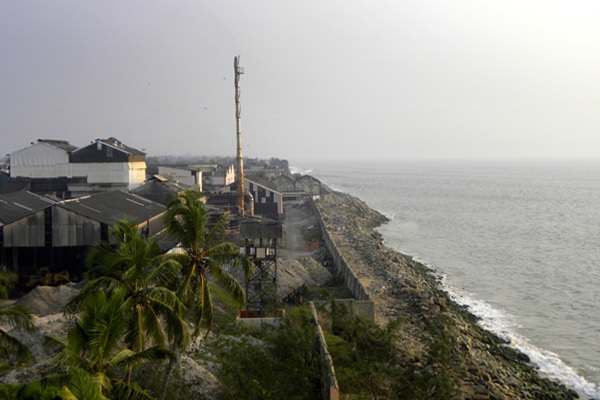
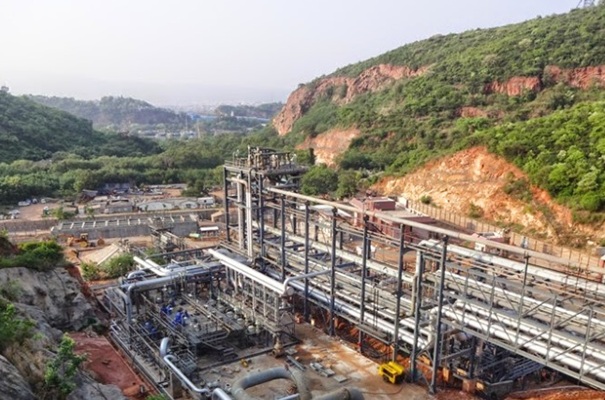
Led by India and South Africa, developing nations are engaged in increasing fossil fuel reserves. They have learned about the power of stockpiles from China, the US, Japan and other advanced economies in response to the Strait of Hormuz chokepoint. To illustrate, South Africa has proposed its biggest strategic build-up of crude in decades. India is already in phase II of expansion of its existing strategic reserves; but immediately, its largest public oil and gas producer, the ONGC, has approved a 1.75 million tonnes (approximately 13 million barrels) expansion of its crude storage facility in Mangaluru. The ONGC will reserve half of this new capacity for national strategic needs, marking the first time that a public sector unit self-funds emergency national reserves to counter supply disruptions. 

Similar plans to build national buffers of crude have been announced across the net energy importing developing world, undeterred by the time and money it will take. Strategic reserves are now regarded as non-negotiable in order to protect national economies from swings in prices and supplies. Several economies have also announced the slashing of fuel subsidies.

These plans are, of course, dwarfed by the fact that a fifth of crude supplies to the world passed through the Strait before the war, estimated at 10-20 million barrels per day. Yet, China has become the act to follow. China's strategic and commercial reserves, estimated at about 1.3 billion barrels, have become crucial in stabilising global energy markets while providing the backstop for its cutting down crude imports to probably the lowest annual level in a decade. By contrast, advanced economies have used about 300 million barrels so far out of the 400 million barrels mandated by the International Energy Agency as 90 days strategic reserves for its rich members.

The India Strategy: Diversification
India, the third largest crude oil consumer in the world, has historically relied on the Strait of Hormuz for roughly 40-50% of its crude oil imports. The picture is very different today. India is widening its sourcing and imports crude from about 40 countries, with 70% of the country’s crude imports now tapped from outside the Strait of Hormuz. In August, crude imports from Venezuela have risen sharply, making it the fourth largest supplier, ahead of Iraq and the US. Indian refiners have also ramped up their purchases of Brazilian and African crude. Russia remains the dominant supplier, with close to 2 million barrels per day.

India’s strategy is about increasingly operating on several fronts at once. Even as it is diversifying suppliers and transportation routes, and building up strategic and commercial inventories, it is also increasing domestic upstream production where possible and accelerating alternatives such as gas, biofuels, electric vehicles and renewables.

Onshoring
A rapid transitioning is also underway in the semiconductor ecosystem from importing finished products to onshoring high-value processing, packaging and assembly of advanced technologies and strategic materials. Illustratively, India has shifted from chip design into physical domestic fabrication, assembly and testing. Complex midstream chemical processing required for high-tech applications are also being onshored.

Dedicated rare earth corridors have been established across Odisha, Kerala, Andhra Pradesh and Tamil Nadu to process rare earth oxides into high-intensity magnets for EVs, wind turbines and missiles. Commercial scale domestic refining has been achieved in several key critical minerals, including high-purity copper, graphite, titanium, silicon, tin, and zirconium. Advanced e-waste and lithium-ion battery scrap recycling has also been successfully onshored, with domestic entities extracting high-purity battery-grade materials locally. At the same time, the Khanij Bidesh India Limited consortium of public sector corporations is actively securing overseas exploration and mining rights in resource-rich countries.

Quietly, India is converting external volatility into a blueprint for sovereign resilience.