.png)

Asian Markets Mixed as Oil Surge Revives Inflation Risk
Here’s your quick read to start the day: a chatty, no-fuss look at overnight moves, the big story, what’s on the docket, and the tickers you need to watch.

Nandinee Keluskar is an independent financial journalist.
September 9, 2026 at 2:20 AM IST
Global Mood: Cautiously Risk-off
Drivers: Iran-US tensions, Brent near $100
Asian markets traded mixed on Wednesday as rising oil prices and renewed geopolitical tensions kept investors cautious. Japan’s Nikkei fell 0.23% and the Topix declined 0.35%, while South Korea’s Kospi and Kosdaq gained 0.36% and 0.47%, respectively. SGX Nifty was down 53 points, or 0.22%, at 23,660.5, signalling a weaker opening for Indian equities.
Brent crude briefly topped $99 a barrel after reports of further Iranian attacks on US naval assets, reviving concerns over energy supply disruptions and inflation. The escalation widened the conflict beyond the Strait of Hormuz, with Iran-backed Houthis targeting Saudi energy infrastructure and shipping, while Washington intensified efforts to restrict Iranian oil exports.
Investors also remained alert to the potential impact on global growth and central bank policy if energy prices stay elevated. Meanwhile, Russia and Ukraine resumed heavy long-range attacks, adding another layer of geopolitical uncertainty. Overall, markets remained cautious, with oil and geopolitical risks weighing on sentiment.
THE BIG STORY
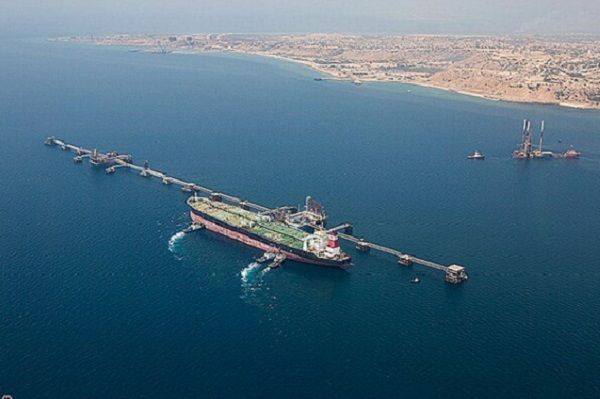
The West Asia conflict widened sharply Tuesday as Iranian-backed Houthis launched drones and missiles at four Saudi cities, including oil facilities in Abha, Najran and Jazan, injuring 73 people and triggering fires at energy infrastructure. The escalation came as the US said it had destroyed five Iranian crude oil carriers, which Washington described as part of a shadow network funding the Islamic Revolutionary Guard Corps and its regional proxies, after attempted Iranian missile attacks on US naval vessels. Tehran retaliated by targeting a US base near Al Azraq in Jordan, while also threatening tankers in Kuwaiti and Bahraini ports, raising the risk that the conflict could increasingly disrupt energy infrastructure and shipping beyond the Strait of Hormuz. Brent rose to its highest level since July 23 and gained another dollar after the Jordan attack, but remained below $100 a barrel, suggesting markets are still pricing some resilience in alternative supply routes despite the widening threat to Gulf energy flows.
The latest escalation reinforces the risk of a broader regional energy shock just as supply disruptions are already testing global oil markets. Houthi attacks on Saudi infrastructure could extend the disruption from the Gulf to the Red Sea, while US efforts to blockade Iranian exports and Tehran's threats against regional shipping raise the prospect of further damage to physical oil and LNG flows. At the same time, the conflict in Ukraine showed little sign of easing, with Russia resuming heavy drone and missile attacks on Kyiv after a three-day pause linked to US peace envoys Jared Kushner and Steve Witkoff, killing five people and injuring dozens. Both Russia and Ukraine have intensified long-range strikes as front lines remain largely static, adding another layer of geopolitical risk to already elevated energy and commodity markets.
Data Spotlight
US one-year inflation expectations held steady at 3.6% in August, though gas expectations jumped 1.7% to 4.6% and food expectations rose to 5.3%. Rent, medical care and college education expectations all edged higher, while the mean probability of unemployment rising in the next year climbed to 44.4%, the highest since April 2020.
The Manheim Used Vehicle Value Index fell 0.9% month-on-month in August, a second consecutive decline, with annual price growth slowing to 0.4%, the weakest since December 2025. Pickups and SUVs continued to drag while affordable older vehicles held up, with retail days' supply tightening to 44 days from 46 in July.
The NFIB Small Business Optimism Index slipped to 98.7 in August from 99.8 in July, missing expectations of 99.3, as actual sales worsened and inflation rose to tie with taxes as the second most cited business concern. Expectations for better business conditions deteriorated, though owners remained broadly positive about their own businesses.
Takeaway: Elevated and broadening inflation expectations, weakening small business sentiment and rising unemployment concerns paint a cautious picture of the US consumer and business outlook heading into September. Cooling used car prices offer a modest disinflationary signal, though persistent cost pressures across food, rent and energy keep the Federal Reserve's task far from complete.
WHAT HAPPENED OVERNIGHT
US stocks fall as AI disruption fears and West Asia tensions weigh
- S&P 500 fell 0.58%, Nasdaq 0.32% and Dow 1.18% as software stocks extended losses and oil hit a six-week high.
- Houthi attacks on Saudi energy facilities added to concerns that the West Asia conflict could become a prolonged market risk.
- September Fed hike odds held around 60% ahead of this week’s CPI and PPI data, the key inputs before the Sep 15-16 FOMC.
- S&P 500 forward P/E has eased to 19x from 21x in June as earnings expectations have strengthened.
US Treasury yields briefly topped 4.8%, highest since October 2023
- 10-year yield touched 4.80% before easing to 4.78% as markets awaited this week’s CPI and PPI data.
- Headline CPI is expected at 3.4%, with core at 2.4%, while PPI is seen accelerating to 5.3% headline and 4.6% core amid higher energy costs.
- Oil’s rise kept September Fed hike odds near 58%, while a three-year Treasury auction marks the start of a heavy supply week.
Dollar slips to 98.8 as yen gains drive carry-trade unwinding
- Dollar index fell for a second session as a stronger yen, on expectations of tighter BoJ policy, triggered further carry-trade unwinding.
- Fed hike odds remain near 60% after Friday’s strong jobs data, with CPI and PPI now in focus.
- Renewed US-Iran fighting lifted oil and inflation risks, while an expected ECB rate hike adds to the global tightening backdrop.
Oil hits six-week high as Houthi attacks widen West Asia supply risks
- Brent settled 0.9% higher at $97.92/bbl, and WTI rose 1.7% to $93.03, both at their highest closes in weeks and technically overbought.
- Houthi attacks on southern Saudi Arabia, which reportedly damaged oil facilities, raised fresh risks to Saudi exports beyond the Hormuz disruption.
- Saudi Arabia’s shift of oil flows towards the Red Sea makes the escalation particularly significant for global supply.
- Goldman Sachs, HSBC and others raised crude forecasts as markets priced in prolonged shipping disruptions, while a potential Russia-Ukraine settlement could provide a supply offset.
- China’s August crude imports fell 23.4% YoY, although tight diesel supplies and refinery disruptions could support winter demand.
Day’s Ledger*
Economic Data
- China August CPI Data
- US Energy Information Administration Short-Term Energy Outlook
Corporate Actions
- Natco Pharma and Sanginita Chemicals to consider fund raising
Policy
- European Central Bank Monetary Policy Meeting Day 1
- German Buba President Nagel Speaks
Tickers to Watch
- Bank of Baroda to divest up to 35% of holding in NSE via OFS under proposed IPO, subject to regulatory approvals; shares escrowed September 8, sale seen by end-September.
- Private equity firm True North-owned Active Pine is likely to sell up to 16.6 million Biocon shares through a block deal at the floor price fixed at 385 rupees per share.
- Great Eastern Shipping Company enters in a contract to buy a second hand 81,609-dwt Kamsarmax dry bulk carrier built in 2019; delivery expected October-December 2026, funded via internal accruals.
- Raymond board approved 3.33 million warrants to Minerva Ventures Fund at 645 rupees each, raising up to 2.15 billion rupees.
- Tata Consultancy Services wins a 1.23 billion rupee Odisha government contract to implement OSWAS 3.0, extending the partnership by around six years; platform serves 4,600-plus government offices and nearly 50,000 users.
Must Read
- Kevin Warsh's Best Move Is To Do Nothing
- India Has The Dollars, The Real Test is Whether it Can Earn Enough
- When Banking Rules Aren’t Enough, India Needs Risk Enforcement
- Putin, Modi to meet Friday ahead of BRICS summit: Kremlin
- US suspends Cognizant green card filings
- India eyes fresh UK investment treaty talks
- Israel shuts UK consulate over trade ban
- Centre restores 'Sahara Refund Portal' to process 2 million pending claims
(*Compiled from various media sources)
See you tomorrow with another edition of The Morning Edge.
Have a great trading day
More From BasisPoint