.png)

Asian Equities Rally on Signs of Progress in US-Iran Negotiations
Here’s your quick read to start the day: a chatty, no-fuss look at overnight moves, the big story, what’s on the docket, and the tickers you need to watch.
May 29, 2026 at 1:54 AM IST
GLOBAL MOOD: Risk On
Asian markets reflected a clear risk-on tone on Friday as investors focused on growing signs of diplomatic progress between the US and Iran, outweighing concerns over fresh military exchanges in the region. Equities across Japan, South Korea and Australia advanced after reports indicated Washington and Tehran had largely agreed on the framework of a temporary deal aimed at extending the ceasefire and gradually reopening the Strait of Hormuz.
The prospect of restoring traffic through one of the world's most critical energy chokepoints improved sentiment by reducing fears of prolonged supply disruptions and easing concerns over elevated oil prices and inflation. Investors interpreted the proposed 60-day extension of the truce as a step toward broader negotiations on Iran's nuclear programme and regional security issues.
However, underlying caution remained. Reports of fresh missile launches by Iran and military activity around the Strait of Hormuz underscored the fragility of the ceasefire. In addition, escalating tensions between Russia and Ukraine continued to highlight broader geopolitical risks. While markets welcomed diplomatic progress, investors remain sensitive to any setback that could reignite energy market volatility.
THE BIG STORY
The US and Iran reportedly reached a preliminary agreement to extend their ceasefire and gradually restore shipping through the Strait of Hormuz, marking the most significant diplomatic breakthrough since the conflict began in late February. According to multiple sources, the proposed arrangement would extend the current truce by another 60 days while negotiators continue discussions on more contentious issues, including Iran’s nuclear programme. The reopening of the Strait of Hormuz would represent a major step toward stabilising global energy markets after months of supply disruption and heightened inflation concerns.
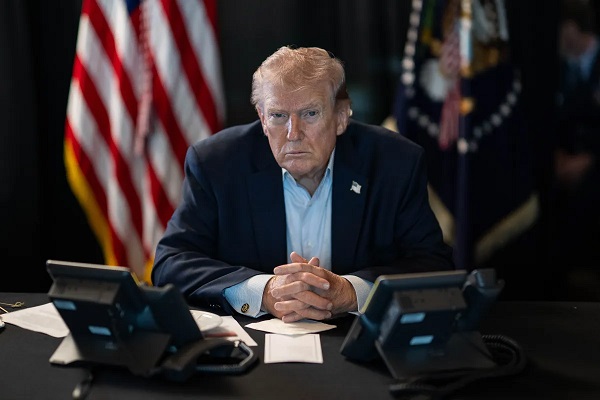
Uncertainty remained high because the deal still needed Donald Trump’s approval, and Iranian state media said the text was not yet finalised or confirmed. Another round of exchanges between Washington and Tehran highlighted how fragile the ceasefire remained despite ongoing diplomacy.
Separately, geopolitical tensions intensified in Eastern Europe as the United States sharply criticised Russia during a United Nations Security Council session following Moscow’s latest large-scale missile and drone attacks on Kyiv. US officials condemned Russia’s use of the nuclear-capable Oreshnik ballistic missile, describing it as a dangerous escalation of the war in Ukraine. Moscow dismissed the criticism and reiterated warnings for foreign diplomats to leave Kyiv, highlighting continued instability across multiple global geopolitical fronts.
Data Spotlight
The US economy expanded at an annualised pace of 1.6% in the first quarter of 2026, below the earlier 2% estimate, as consumer spending and investment were revised lower. Consumer spending rose 1.4%, supported mainly by demand for services, while goods consumption remained subdued. Business investment remained relatively strong, particularly in equipment and intellectual property products, although residential investment and structures weakened sharply. Net trade continued to drag on growth as imports surged faster than exports, while government spending rebounded following the end of the previous quarter’s shutdown-related disruptions.
Labour market conditions remained resilient despite a modest increase in jobless claims. Initial unemployment claims rose to 215,000, and continuing claims edged higher. However, both measures stayed well below levels seen last year, reinforcing expectations that the labour market remained firm enough for the Federal Reserve to maintain a restrictive policy stance.
Inflation data showed some moderation in monthly price pressures but continued strength on an annual basis. Headline PCE inflation, the Fed’s preferred inflation gauge, rose 0.4% month-on-month in April, slightly below expectations, while core PCE increased 0.2%. However, annual headline PCE inflation accelerated to 3.8%, the highest since May 2023, and core PCE edged up to 3.3%, indicating that inflation remained significantly above the Federal Reserve’s 2% target despite some easing in monthly momentum.
Takeaway:
WHAT HAPPENED OVERNIGHT
- US stocks hit fresh record highs as ceasefire optimism and AI momentum lifted sentiment
- S&P 500 and Nasdaq closed at fresh record highs after reports indicated the US and Iran had reached a draft agreement to extend their ceasefire for 60 days.
- Dow Jones also ended marginally higher at another record closing high.
- Reuters reported the proposed agreement still required approval from Donald Trump, while Iranian media said the memorandum remained unconfirmed.
- Dow Jones rose 0.05%, S&P 500 gained 0.58%, and Nasdaq advanced 0.91%.
- Eli Lilly climbed 4% after CVS Health restored insurance coverage for its obesity treatment products.
- Microsoft gained 3.5% following reports that it planned to launch a new coding AI model.
- Marvell Technology rose 3% after UBS increased its target price.
- Snowflake surged 36% after raising annual revenue guidance and announcing a $6 billion AI infrastructure agreement with Amazon Web Services.
- S&P 500 and Nasdaq closed at fresh record highs after reports indicated the US and Iran had reached a draft agreement to extend their ceasefire for 60 days.
- US Treasury yields declined as easing energy fears supported bonds
- The US 10-year Treasury yield fell to 4.46%, extending declines from the 16-month high of 4.7% reached on May 20.
- Reports of a temporary US–Iran agreement improved sentiment and reduced immediate inflation concerns.
- The proposed 60-day memorandum of understanding would reportedly extend the ceasefire and gradually restore shipping through the Strait of Hormuz.
- Cooling energy prices supported demand for Treasuries after recent inflation data broadly met expectations.
- US PCE inflation data did not surprise to the upside, while first-quarter GDP growth was revised lower due to softer investment activity.
- Consumer spending and labour market conditions nevertheless remained relatively resilient.
- Hawkish commentary from Federal Reserve officials limited further declines in yields.
- Fed Vice Chair Philip Jefferson warned that inflation risks remained skewed to the upside.
- Neel Kashkari said inflation remained “much too high,” reinforcing expectations of restrictive monetary policy.
- The US 10-year Treasury yield fell to 4.46%, extending declines from the 16-month high of 4.7% reached on May 20.
- US Dollar weakened after softer inflation data and ceasefire optimism
- The US dollar index fell to 99 after retreating from session highs near 99.5.
- Sentiment improved after reports suggested the US and Iran had reached an agreement to extend the ceasefire, pending approval from Donald Trump.
- The greenback also weakened following softer-than-expected US PCE inflation data.
- Headline PCE inflation rose 0.4% month-on-month, while core PCE increased 0.2%.
- Annual headline and core inflation nevertheless remained elevated at 3.8% and 3.3%, respectively.
- The inflation data eased concerns that recent energy price shocks would significantly worsen the broader inflation outlook.
- Investors continued to monitor conflicting geopolitical signals and awaited confirmation of a durable ceasefire agreement.
- The US dollar index fell to 99 after retreating from session highs near 99.5.
- Oil prices traded mixed as ceasefire negotiations remained uncertain
- Brent crude for July delivery fell 0.6% to settle at $93.71 per barrel. The more active August Brent contract traded higher near $92.97 per barrel.
- WTI crude edged up 0.3% to settle at $88.90 per barrel.
- Oil markets remained volatile as investors assessed conflicting signals around a possible extension of the US–Iran ceasefire.
- Traders continued to monitor whether negotiations could eventually stabilise shipping flows through the Strait of Hormuz.
- Persistent uncertainty surrounding geopolitical tensions kept energy markets cautious despite signs of diplomatic progress.
- Brent crude for July delivery fell 0.6% to settle at $93.71 per barrel. The more active August Brent contract traded higher near $92.97 per barrel.
Day’s Ledger*
Economic Data
- Germany May Unemployment Data
- German May CPI Inflation Data
- India Apr-Mar Government Finances
- India April Services trade Data
Corporate Actions
- Earnings: A2Z Infra Engineering, Aegis Logistics, Asian Paints, Bajaj Hindusthan Sugar, Bannari Amman Spinning Mills, Bartronics India, BEML, Deccan Cements, Everest Kanto Cylinder, Fertilizers and Chemicals Travancore, Glenmark Pharmaceuticals, Gujarat Gas, GVK Power & Infrastructure, Hinduja Global Solutions, HT Media, Inox Wind, JM Financial, MMTC, Munjal Showa, Natco Pharma, NMDC, Panacea Biotec, Reliance Communications, Simbhaoli Sugars, Steel Strips Wheels, Tamilnadu Telecommunication, Wanbury, and Zee Media Corporation
Policy
- BoE Governor Bailey Speaks
- FOMC Member Bowman Speaks
- FOMC Member Kashkari Speaks
- FOMC Member Daly Speaks
Tickers to Watch
- ZYDUS LIFESCIENCES increased buyback price to ₹1,260 per share from ₹1,150 while reducing the number of shares to be repurchased under the ongoing buyback programme.
- OIL INDIA subsidiary OIL Green Energy signed a JV with Hindustan Waste Treatment to develop bioenergy and sustainable waste management projects in India.
- PATANJALI FOODS received a tax demand notice of ₹13.5 billion for FY23, including GST dues, penalty and interest.
- GODFREY PHILLIPS INDIA signed a contract manufacturing agreement with Polisetty Somasundaram Tobacco Products for cigarettes and tobacco products.
- HG INFRA ENGINEERING emerged as the successful bidder for an interstate power transmission project in Jharkhand awarded by RECPDCL.
- BATA INDIA reported a sharp decline in Jan-Mar profit due to a one-time VRS expense amid modest revenue growth and margin pressure.
- HIKAL reported weak Jan-Mar earnings with declines in profit, revenue and margins, though management indicated sequential recovery trends.
- GMR AIRPORTS reported Jan-Mar net profit of ₹3.0 billion versus a loss of ₹2.4 billion a year ago, while revenue rose 37.5% to ₹39.4 billion.
- PB FINTECH co-founders Yashish Dahiya and Alok Bansal are likely to sell a 0.8% stake via block deals at a floor price of ₹1,720 per share.
- AWL AGRI BUSINESS entered a strategic arrangement with Shree Renuka Sugars to market the “Madhur” brand through its nationwide distribution network.
- INDOCO REMEDIES received EU GMP certification from Germany’s health authority for its oral solid dosage facility in Himachal Pradesh.
- HBL ENGINEERING secured a ₹17.1 billion contract from Chittaranjan Locomotive Works for supply, installation and commissioning of Kavach loco equipment.
- ESCORTS KUBOTA introduced the Kubota Neostar compact tractor range in the 21–30 HP segment, targeting key agricultural markets across western and central India.
Must Read
- Iran, US reach deal to extend ceasefire, pending Trump's approval
- US imposes fresh sanctions on Iran's military oil sales, Treasury says
- Taiwan’s Concentration Looks More Valuable Than India
- Can Accepted Practices Become Governance Risks?
- Tamil Nadu's Wager: Can TVK Marry Anticorruption to Welfare?
- Will RBI Bite the Bullet or Kick the Can Down the Road, Again?
- How SpaceX Is Moving Capital Markets from Submissive to Permissive Regime
- Masters of the Universe: How Bull Market Prophets Turned Bear Market Lobbyists
- The Bay Of Bengal And The Return Of Civilisational Connectivity
Have a great trading day
Is NITI Aayog losing relevance?
A decade after replacing the Planning Commission, India’s premier policy think tank is at a crossroads. While it has launched several initiatives like the Aspirational Districts Programme and Atal Innovation Mission, questions remain about its impact, focus, and ability to shape policy in a rapidly changing global environment.
Sharmila Kantha argues that NITI Aayog needs a major overhaul — to become a forward-looking economic research hub and strategic trendspotter. It must strengthen its role in data synthesis, geopolitical risk assessment, and evidence-based policymaking to stay truly relevant.
(*Compiled from various media sources)
More From BasisPoint