.png)

Asia Stocks Advance as Investors Track West Asia Diplomacy
Here’s your quick read to start the day: a chatty, no-fuss look at overnight moves, the big story, what’s on the docket, and the tickers you need to watch.
May 22, 2026 at 1:56 AM IST
GLOBAL MOOD: Cautiously Risk On
Drivers: Iran Negotiation Uncertainty, Fed Transition
Asia-Pacific markets reflected a cautiously risk-on mood on Friday as investors focused on ongoing diplomatic efforts between the US and Iran, raising hopes that tensions in West Asia could eventually ease. Regional equities advanced across Japan, South Korea, Hong Kong and mainland China despite persistent uncertainty around Iran’s nuclear programme and control over the Strait of Hormuz.
Investor sentiment improved after reports suggested both Washington and Tehran had narrowed differences in recent negotiations, even though major disagreements remained unresolved. US Secretary of State Marco Rubio said talks had shown “some good signs,” helping markets look past continued tensions over Iran’s enriched uranium stockpile. Oil prices rebounded after the previous session’s decline, highlighting lingering concerns over potential disruptions to global energy supplies.
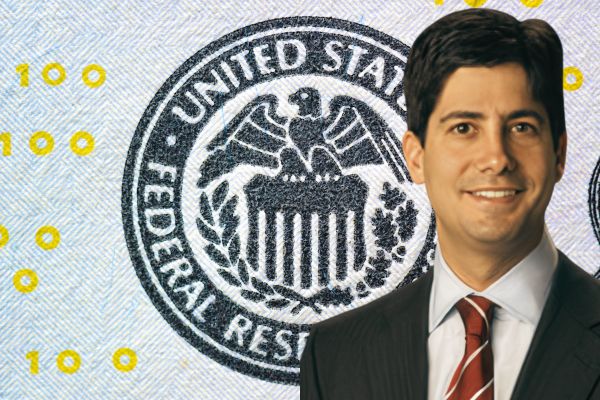
In Japan, softer-than-expected core inflation strengthened expectations that the Bank of Japan may delay further rate hikes, supporting equities. Markets were also assessing the transition at the Federal Reserve, with Kevin Warsh set to take over as chair amid growing concerns that elevated energy prices and geopolitical risks could keep US inflation and interest rates higher for longer.
TODAY’S WATCHLIST
- RBI Board Meet
THE BIG STORY
Despite the continued diplomatic deadlock, reports indicated that both sides had narrowed some differences, keeping hopes alive for a potential agreement that could ease geopolitical tensions and reduce pressure on global energy markets. However, uncertainty surrounding the Strait of Hormuz and uranium enrichment remained major obstacles to a final deal.
Meanwhile, the White House confirmed that Kevin Warsh would be sworn in as the new chair of the Federal Reserve, succeeding Jerome Powell. Warsh has previously advocated lower interest rates alongside balance sheet reduction, but he now takes office as several Fed policymakers increasingly support additional tightening due to inflationary pressures linked to the Iran conflict and elevated energy prices.
The leadership transition added another layer of uncertainty to the US monetary policy outlook as markets assessed whether persistent inflation and geopolitical risks could eventually force the Federal Reserve toward further policy tightening.
Data Spotlight
Despite softer housing activity, labour market conditions remained resilient, with weekly jobless claims edging lower to 209,000 and continuing claims remaining relatively stable, reinforcing expectations that the US employment backdrop remained firm enough for the Federal Reserve to maintain a restrictive policy stance.
Manufacturing data painted a mixed picture. The Philadelphia Fed Manufacturing Index unexpectedly slipped into contraction territory at -0.4, reflecting weaker shipments and new orders. However, broader national manufacturing momentum remained strong, with the S&P Global US Manufacturing PMI rising to 55.3, its highest level since May 2022.
Takeaway:
WHAT HAPPENED OVERNIGHT
- US stocks ended higher as easing oil prices supported late-session recovery
- Dow Jones gained 0.55% to a record closing high, while S&P 500 rose 0.17% and Nasdaq added 0.09%.
- Investor sentiment improved after oil prices reversed earlier gains amid cautious optimism around US–Iran negotiations.
- US Secretary of State Marco Rubio said talks with Iran showed “some good signs,” although disagreements remained over uranium controls and the Strait of Hormuz.
- Nvidia declined 1.8% as investors booked profits despite strong guidance and an $80 billion buyback announcement.
- Quantum computing and advanced technology shares surged after reports the Trump administration would support selected quantum firms.
- IBM rose 12.4%, while several quantum computing companies posted gains exceeding 30%.
- Intuit plunged 20% after lowering revenue guidance and announcing workforce reductions.
- H&R Block also declined following weakness in the tax software sector.
- Dow Jones gained 0.55% to a record closing high, while S&P 500 rose 0.17% and Nasdaq added 0.09%.
- US Treasury yields rose as Iran uncertainty revived inflation fears
- The US 10-year Treasury yield rose to 4.62%, reversing the previous session’s decline.
- Markets continued to monitor uncertainty surrounding potential US–Iran negotiations and the Strait of Hormuz situation.
- Mixed diplomatic signals increased doubts over a near-term agreement and full restoration of shipping traffic.
- Reuters reported that Iran’s Supreme Leader directed that near-weapons-grade uranium should not be sent abroad, reinforcing Tehran’s hardline stance.
- Rising oil prices renewed concerns that energy inflation could remain elevated for longer.
- FOMC minutes showed that most policymakers saw further rate hikes as possible if inflation remained above target.
- Markets still broadly expected the Federal Reserve to keep rates unchanged through year-end.
- Traders continued to price in around a 40% probability of a December rate hike.
- The US 10-year Treasury yield rose to 4.62%, reversing the previous session’s decline.
- US Dollar strengthened as Iran tensions revived inflation concerns
- The US dollar index rose to 99.4, reaching its highest level since April.
- Renewed doubts over a near-term resolution to the Iran conflict supported safe-haven demand for the greenback.
- Reports indicated Iran’s Supreme Leader rejected sending near-weapons-grade uranium abroad, hardening Tehran’s stance in negotiations with Washington.
- Rising geopolitical uncertainty pushed oil prices higher again, reinforcing global inflation concerns.
- FOMC minutes showed that many Federal Reserve policymakers remained open to additional rate hikes if inflation stayed above target.
- Markets still broadly expected the Fed to keep interest rates unchanged this year.
- Traders continued to price in around a 40% probability of a 25 basis-point rate hike in December.
- The US dollar index rose to 99.4, reaching its highest level since April.
- Oil prices fell as cautious optimism on Iran conflict weighed
- Brent crude declined 2.3% to settle at $102.58 per barrel, while WTI crude fell 1.9% to close at $96.35 per barrel.
- Both benchmarks ended at their lowest levels in nearly two weeks.
- Oil markets remained volatile as investors assessed uncertainty surrounding the US–Israel conflict with Iran.
- Traders continued monitoring whether ongoing negotiations could eventually reduce supply disruption risks in West Asia.
- Despite the decline, markets remained cautious as geopolitical tensions and Strait of Hormuz disruptions had not been fully resolved.
- Brent crude declined 2.3% to settle at $102.58 per barrel, while WTI crude fell 1.9% to close at $96.35 per barrel.
Day’s Ledger*
Economic Data
- Germany Jan-Mar GDP Data
- Germany May Ifo Business Climate Index
- India Weekly FX Reserves Data
Corporate Actions
- Earnings: 3M India, Ballarpur Industries, Century Plyboards (India), Colgate Palmolive (India), Eicher Motors, Fortis Healthcare, Gujarat State Fertilizers & Chemicals, Hindalco Industries, Indigo Paints, Ircon International, Jindal Drilling And Industries, Jubilant Pharmova, Kolte - Patil Developers, KSR Footwear, Minda Corporation, NTPC Green Energy, Ramco Cements, Remsons Industries, Sun Pharmaceutical Industries, Torrent Pharmaceuticals, and TTK Prestige
POLICY
- RBI Board Meeting
- US Fed Waller Speaks
Tickers to Watch
- EICHER MOTORS will acquire a 50% stake in Volvo Financial Services through a ₹7.5 billion investment, forming a 50:50 JV.
- FINO PAYMENTS BANK said MD & CEO Rishi Gupta opted for voluntary early retirement effective May 21, while Ketan Merchant’s interim CEO tenure was extended for three months subject to RBI approval.
- INDIAN OVERSEAS BANK plans to raise up to ₹50 billion via FPO and ₹10 billion through Tier-2 bonds under its FY27 capital plan.
- JB CHEM fixed May 29 as the record date for its FY26 final dividend.
- MARUTI SUZUKI will raise vehicle prices by up to ₹30,000 from June to partly offset higher input costs.
- OLA ELECTRIC said FY26 volumes were below expectations and plans to transition its portfolio to proprietary battery cells by September 2026.
- PAYTM may see SAIF Partners sell 8.6 million shares, or 1.3% stake, through block deals at a floor price of ₹1,120.65 per share.
- TATA STEEL received Supreme Court relief after an ₹8.91 billion GST demand was stayed.
- UNION BANK’s board will meet on May 26 to consider fundraising through QIP, rights issue and other instruments.
Must Read
- Rupee Near 100: When Currency Weakness Reflects a Trust Deficit
- Why SGB Maturity & Gold ETF Schemes May Blunt India’s Efforts To Curb Imports
- A Cold Shower for the AI Mania
- Inside the unraveling of US diplomacy under Trump
- Reliance just refined its taste with new crude crush
- Hormuz closure threatens recession rivaling 2008'
- Let the rupee depreciate past ₹100 to a dollar, 16th Finance Commission chairman advises RBI
- EU Seeks to Lift Ban on Chinese Chips It Barred Only Weeks Ago
See you tomorrow with another edition of The Morning Edge.
Have a great trading day
Central Banking Beyond Textbooks, Critics, and Commentators
Central banking today is no longer the relatively predictable exercise imagined by post-Cold War economic textbooks. Wars, climate-linked inflation, fractured geopolitics, volatile capital flows and energy insecurity have transformed central banks into institutions tasked with preserving systemic confidence amid persistent uncertainty.
Srinath Sridharann writes, the Reserve Bank of India is increasingly being judged through simplistic theoretical comparisons and advanced-economy frameworks, while managing one of the world’s most complex macroeconomic environments spanning inflation, currency stability, financial supervision, sovereign debt management and developmental transformation simultaneously.
At a time when commentary often rewards certainty and ideological absolutism, the real challenge of central banking lies in balancing competing risks without destabilising broader economic confidence, while remaining deeply informed by market intelligence, institutional listening and real-economy feedback across an increasingly volatile financial system.
(*Compiled from various media sources)
More From BasisPoint