.png)

Adani Green's Growth Machine Faces a Reckoning on Value
India's largest listed renewable company demonstrates execution prowess, but collapsing profits and highly leveraged debt raise questions about premium valuations.

Dev Chandrasekhar advises corporates on big picture narratives relating to strategy, markets, and policy.
January 30, 2026 at 5:40 AM IST
Adani Green Energy is India's largest listed renewable energy company by a long shot, its 17.2 GW of operational capacity, more than double of second-placed JSW Energy's 7.6 GW renewable portfolio. The company is adding capacity at a pace few peers can match. In the first nine months of fiscal 2025-26, Adani Green added 3.0 GW, representing over 90% of the prior year's additions, whilst revenue climbed 25% to $1.0 billion. EBITDA margins above 91% reflect the capital-light nature of selling power under long-term contracts.
Yet, net profit collapsed 99% year-on-year to ₹50 million in the September-December quarter, whilst cash profit fell 18% year-over-year to $97 million. How does a company with 91% EBITDA margins see profits evaporate? In the case of Adani Green, depreciation, interest expenses, and currency hedging costs are consuming earnings faster than mature projects generate them. The fundamental tension between aggressive expansion and near-term profitability represents the central challenge for any capital-intensive infrastructure.
At 91 times trailing earnings per share, Adani Green trades at a substantial premium to peers Tata Power at 28 times and JSW Energy at 35x. Investors are betting that India's energy transition justifies today's price—a bet demanding scrutiny.
That bet faces pressure from the balance sheet. Net debt rose 18% to ₹760.7 billion as of December 2025 from ₹644.6 billion six months earlier. Management’s target of net debt-to-EBITDA of 3 times or less will require considerable effort given it’s currently at 5.6 times. Interest expense consumes a substantial portion of cash generation, and borrowing costs might rise following US legal summons of board members and senior executives as perceived risk premiums rise.
Adani Green's plan to reach 50 GW by 2030 requires adding 6.5 GW annually. The company added 5.6 GW this past year, proving execution capability. But whilst management targets ₹45.5-54.6 billion per GW, actual FY25 spend averaged ₹95 billion per GW, perhaps reflecting technology mix and site-specific factors. That implies ₹1.8 trillion in capital needs over four years, steep for a company generating ₹39.1 billion in nine-month cash profit. The funding challenge grows more acute with every gigawatt added.
Yet Adani Green demonstrates genuine competitive advantages. Whilst most renewable generators struggle with chronically delayed payments from state distribution companies, Adani Green maintains just three days receivables as of December 2025. This stems from 72% exposure to highly-rated counterparties like SECI and NTPC rather than cash-strapped state utilities. The company reported no write-offs in recent quarters, suggesting asset quality remains intact despite the profit collapse.
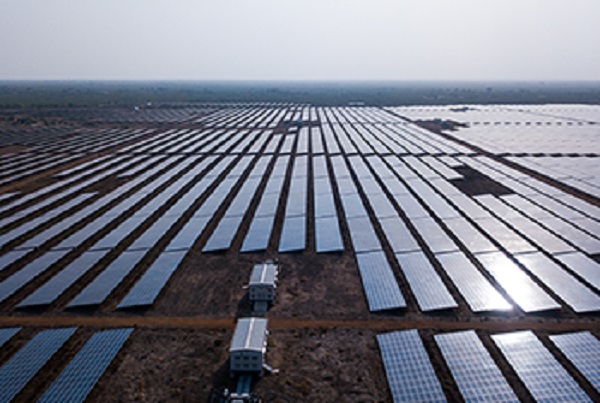
The Khavda project illustrates both opportunity and challenge. With 5.6 GW operational across 3.1 GW solar, 462 MW wind, and 981 MW hybrid installations, and plans for 30 GW by 2029, Khavda represents industrial-scale execution few can match. Capacity utilisation of 40% is, well above the 29.2% portfolio average. Yet success depends on transmission infrastructure that management acknowledges faces challenges. Any delays ripple through the capital deployment plan.
The management aims to increase merchant and commercial-industrial exposure from 19% to 25% by 2030, up from 8% in September 2024. Capturing premium pricing makes sense, but merchant power introduces volatility at over 5 times leverage. The push into pumped hydro and battery storage, targeting over 5 GW by 2030, requires mastering distinct technologies whilst deploying ₹300-350 billion annually. That's managing three major platforms with $9 billion in debt.
India's renewable build-out represents a compelling investment theme, and Adani Green has proven its ability to execute at scale. Capacity added ahead of schedule, operational metrics above peers. The question isn't whether Adani Green will grow—it will. The question is whether growth at any price makes sense. The premium valuation demands perfect timing on refinancing, seamless technology diversification, and sustained merchant pricing power. Deploying and servicing ever-growing debt-fuelled expenditures under regulatory pressure is ambitious for a company whose quarterly net profit just collapsed 99% versus a year ago.
More From BasisPoint