.png)

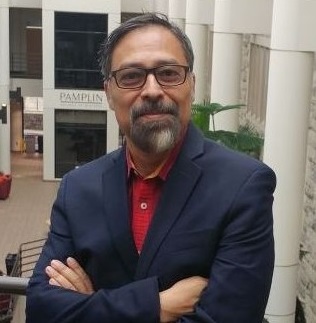
Sudipta Sarangi is a Professor and the Department Head of Economics at Virginia Tech. He has been a consultant to the World Bank and FAO, and is the author of Economics of Small Things .
January 30, 2026 at 4:56 AM IST
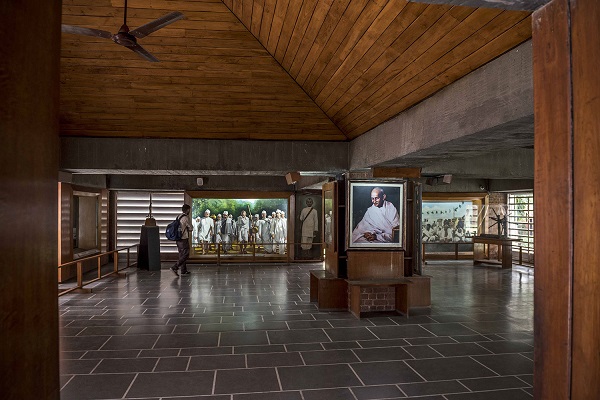
Ahmedabad ends being a frequent pit stop on my visit to India. And on every visit, I plan to visit the Gandhi Ashram. However, the like best laid plans of mice and men, unforeseen events occur and my plans go awry. However, this year the memories of my schooldays and the rising tide of Gandhi criticism got the better of me. I managed to visit the Ashram set in a small tranquil space on the banks of the Sabarmati river. What strikes you immediately is the simplicity of the place and the passion with which the main parts of the Ashram complex have been kept up. There was only a smattering of visitors and a gathering of some school children frolicking in the gardens. Perhaps I had chosen an off-peak day or perhaps the absence of throngs was indicative of how Gandhi is viewed in modern India. Of course, it was heartening to note that school children still made it there.
My visit was a humbling experience – you realize why Gandhi was not a mere mortal, he was truly a titan.
The people of India used to fondly call Mohandas Karamchand Gandhi “Bapu,” or the Father of the Nation. Note he did not give himself this name. It was our grandparents and parents who called him by this name. Mahatma Gandhi or the “venerable” Gandhi was an epithet that was used for him in 1914 in South Africa, because he went out of his way to fight for the rights of Indians there. Indeed, such was his stature that you could just write to him with regard for his whereabouts. The address could be
To,
Mahatma Gandhi,
Wherever he is,
and the colonial British Government run postal service would find him and deliver the letter to him. You can see a selection of such envelopes on display at the Ashram.
Gandhi lived in the Ashram from 1917-1930 and ran India’s freedom struggle from here. His office or the “war room” is an austere almost monastic space. It is so stark in its simplicity that it probably did not bother Gandhi much when the British put him in prison. He practiced what he preached and I was truly touched by the prayer that hung on the entrance wall of the little hut in which he lived with his wife Kasturba Gandhi. Let me offer you a few lines from this prayer:
Give us receptiveness,
give us open heartedness
give us Thy humility
give us the ability and willingness
to identify ourselves
with the masses of India.
To his detractors I ask, find me more than a handful of politicians in contemporary India who are willing to say a prayer echoing these words.
As you walk around the Ashram, you see meticulously curated pictures, quotes and information about Gandhi. You realize that he was a visionary and was already espousing causes that are a key component of the Sustainable Development Goals. For instance, he envisioned an Economic Constitution and said: “The economic constitution of India and of the world should be such that no one under it should suffer for want of food and clothing…just as all have or should have equal right to air or water… their monopolization by any country, nation or group of people is unjust.” For him it was an inalienable right and not a mere political promise. No wonder his philosophy resonated with the likes of Martin Luther King and Nelson Mandela. Essentially, he wanted the right to food and clothing, to become the anthem of the impoverished nations of the world.
But not even Mahatmas are perfect. It has been claimed and rightfully so, that his views on women were not entirely progressive. Yes, based on whatever I have read there these claims cannot be dismissed, but in his own contradictory way, he believed in the equality of women too. At the Ashram you can see his opinion on gender equality: “I make no distinction between man and woman. Women should feel just as independent as men.” Observe that he emphasizes that not only must we strive for equality, but we must ensure that women are able to feel independent and for modern India I want to add, safe as well. In fact, his position can be seen as a nuanced one. If we make a distinction between gender roles or what women should do in society and gender wellbeing or their state of being comfortable, healthy or happy, then his stance is abundantly clear.
Gandhi was the champion of yet another idea that has a lot of currency now: local self-government. He wanted villages to be self-reliant, an idea that might gain more traction in the future as we move towards more locally sourced products. But he wanted all of this to be embedded with democracy and said: “My notion of democracy is that under it the weakest should have the same opportunity as the strongest… No country in the world today shows any but patronizing regard for the weak…Western democracy, as it functions today is diluted fascism… True democracy cannot be worked by twenty men sitting at the center. It has to be worked from below by the people of every village.” This in fact, already embodies the notions like the capabilities approach to human wellbeing and reads almost like a tautological statement.
On this day when we remember his passing, I want to remember Gandhi for everything he gave us, but especially for two key ideas. The first is the idea of using non-violence as force to reckon with. He was not the first to think of it – its roots are deep, even going back to Buddha, but he showed us how to use it as weapon to reckon with at scale. Even the idea of different “yatras” that modern politicians engage in owes its origins to the famous Dandi March he undertook from this very Ashram to defy the punitive British laws on salt making. The second most important takeaway for me from my visit was powerful saying from this proverb-maker: “Love is the strongest force the world possess.”
It is time for everyone to revisit the man and his Ashram.
Actually, Bollywood did get it right: Bande may tha dam, Vande Mataram!
More From BasisPoint